First Time on the Mat: How to Prepare, What to Expect, and How to Excel
Crossing the Threshold into the Dojo
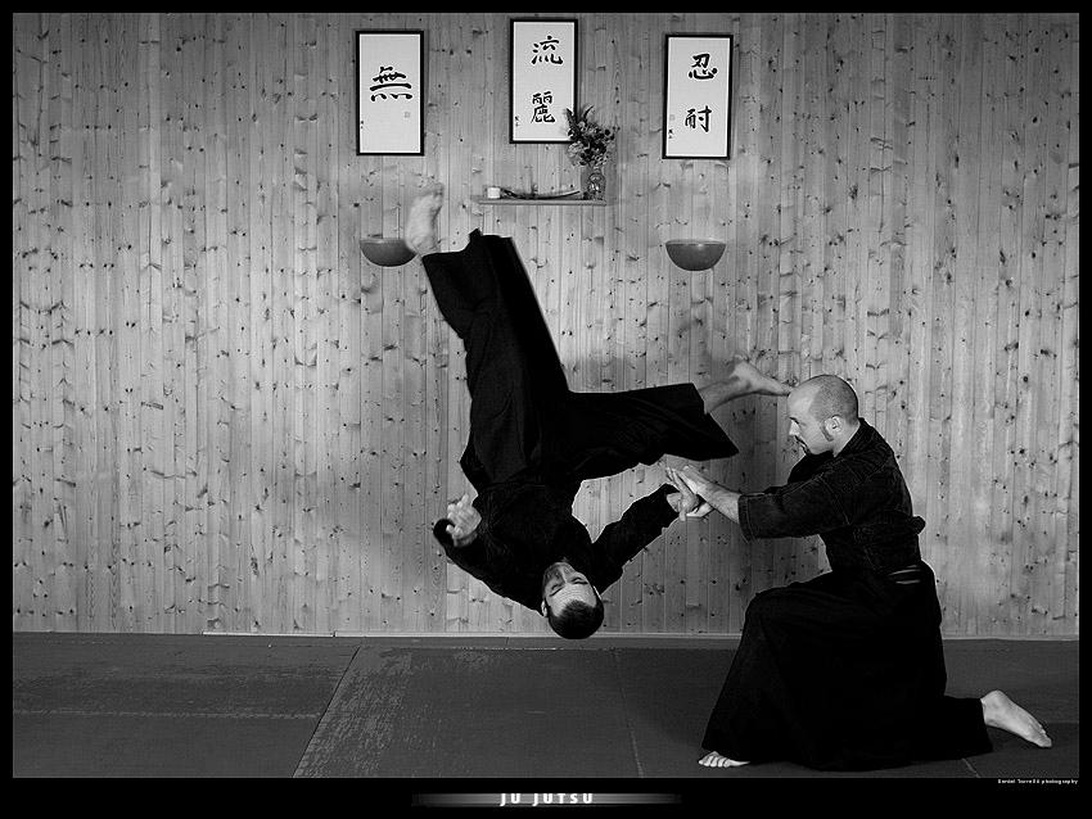
Walking into a traditional dojo, Brazilian jiu-jitsu academy, or karate school for the first time can feel like entering a different world. The room may be quieter than expected, the uniforms may look unfamiliar, and experienced students may move with a level of coordination that makes a beginner feel conspicuous. There are bows, Japanese terms, lines, belts, and rules about where to stand. That sensory and social shock is normal. Every new student must begin somewhere, and confidence does not arrive before training. It is built through the first few consistent steps.
Dojo customs are not designed to intimidate newcomers. At their best, they create safety, mutual respect, and internal focus. A bow acknowledges the people who will help you learn. A clean uniform reduces distractions and communicates consideration. Lining up gives the class a clear beginning, while controlled partner work ensures that everyone can practice without unnecessary risk. Whether you are preparing for your first karate class or a beginner session in Brazilian jiu-jitsu, this guide provides a practical road map from arrival through warm-up, technical instruction, and partner training.
Pre-Class Preparation and Essential Mat Etiquette
Preparation begins before you reach the training floor. Arrive approximately 10 to 15 minutes early so you can find the changing area, introduce yourself to the instructor, complete any required paperwork, and observe how students enter the space. Wear clean training clothes or a clean gi, depending on the school”s instructions. Shower before class when possible, use deodorant, and keep your fingernails and toenails trimmed. Long hair should be tied back securely. Remove watches, rings, necklaces, earrings, and other jewelry because they can injure you or a partner. Silence your phone and keep personal belongings away from the mat.
Most traditional schools expect students to remove shoes before entering the dojo or stepping onto tatami. This may happen at a genkan, near the doorway, or at the edge of the mat. Place your shoes neatly together with the toes facing outward, making it easier to leave without disturbing others. If the school has a particular entrance ritual, watch what senior students do and ask an instructor if you are unsure. Customs vary between schools, but the principle remains consistent: enter cleanly, move with awareness, and avoid creating unnecessary disruption.
The belt, or obi, is both a practical piece of equipment and a visible reminder that progress depends on disciplined repetition. Different organizations use slightly different tying methods, so the instructor”s version always takes priority. A common karate method can be practiced with the following sequence:
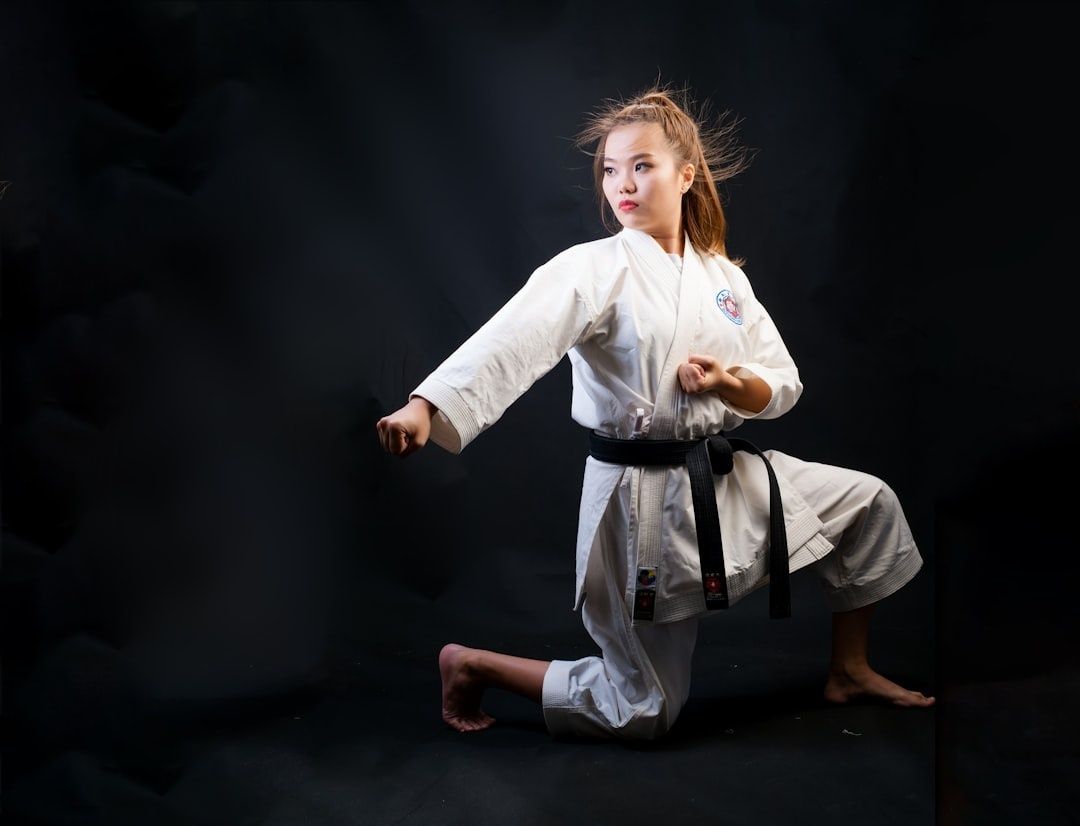
- Find the center of the belt and place it against the front of your body, usually just below the navel, with both ends hanging evenly.
- Wrap both ends around your waist and bring them to the front. Keep the belt flat rather than twisting it.
- Cross the ends, usually with the left side over the right, according to the dojo”s standard.
- Pass one end beneath both layers around your waist, then bring it upward and across the front.
- Tie the final knot by crossing the ends and pulling one through the opening. Tighten it firmly without restricting breathing or movement.
- Check that the ends are approximately even and that the belt sits securely during practice.
The goal is not perfect symmetry on the first attempt. The goal is to learn the process, remain patient, and show respect for the uniform. If the belt comes loose, step to the side or ask a senior student for assistance rather than stopping in the middle of a drill. Small routines such as tying the obi teach presence: attention moves away from embarrassment and toward the next useful action.
Anatomy of Your First Session from Bow-in to Warm-up
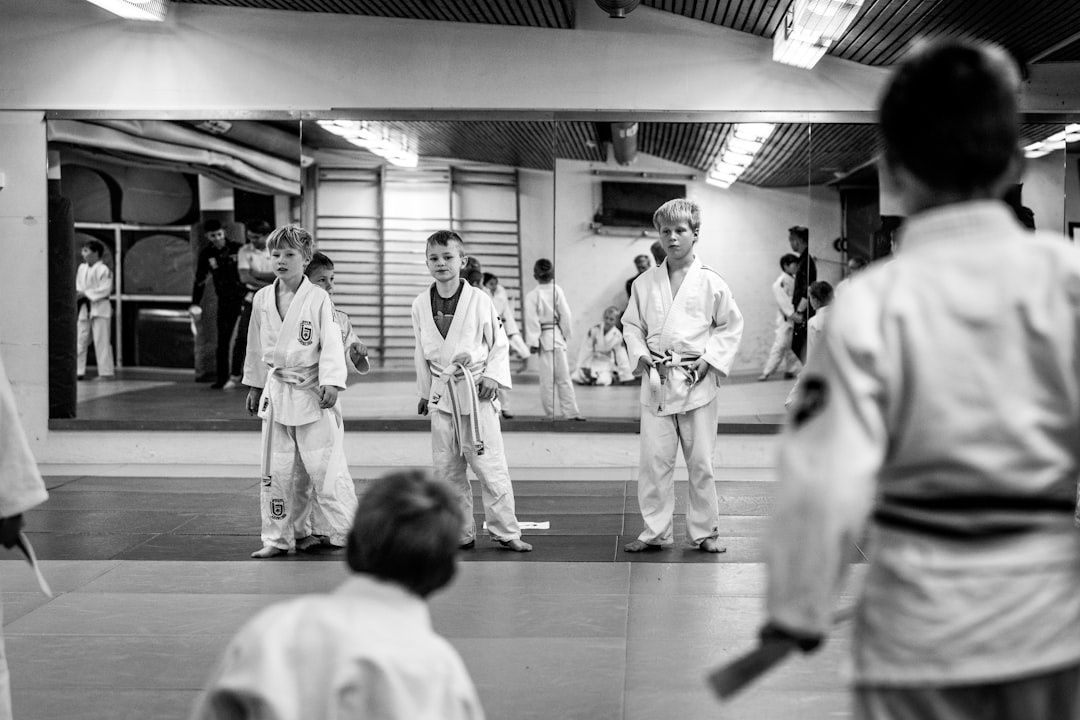
A first class may look more formal than it feels from the outside. The instructor is usually assessing how beginners move, breathe, listen, and respond to correction, not expecting polished technique. Some schools begin with a seated meditation or quiet breathing, followed by a line-up, while others move directly into mobility exercises. In many traditional settings, students line up by rank, with senior students toward the front and beginners toward the back or designated end. The instructor may lead a bow toward the front of the dojo, a bow to the teacher, and a reciprocal bow between students. Follow the group, keep the bow sincere and brief, and avoid worrying about whether every angle is exact.
Expect the session to alternate between instruction and repetition. A teacher may demonstrate a movement slowly, explain one or two essential points, and then have the class practice it in place or with a partner. Effective beginner instruction often introduces a movement in context before refining its details, because balance, posture, timing, spatial awareness, and breathing are easier to understand when connected to a complete action. The first lesson may involve less intensity than expected, but that does not make it easy. The work is designed to build useful habits without overwhelming the body.
| Beginner expectation | What commonly happens on the mat |
|---|---|
| Warm-up means light stretching | Warm-ups may include jogging, mobility, stance work, technical movements, and short conditioning intervals. |
| Every technique will be explained in detail | The instructor may give a simple version first, then add detail after students understand the basic shape. |
| Experienced partners will move at full speed | Responsible partners adjust speed, pressure, and complexity to support safe learning. |
| Etiquette must be memorized immediately | Students learn customs by observing, asking questions, and repeating them over several classes. |
| Feeling tired means something is wrong | Cardiovascular and muscular fatigue are normal, but sharp pain, dizziness, or unusual symptoms require a pause and instructor guidance. |
Conditioning is one area where pacing matters. Beginners often start too hard because adrenaline makes the first minutes feel manageable. Instead, aim for a sustainable effort that allows you to keep responding to instructions. Breathe continuously, relax your shoulders, and take a controlled modification when necessary. If the class uses rounds, use the first round to learn the rhythm rather than prove fitness. You can slow down, step instead of jump, or briefly rest in a safe position while remaining engaged. Tell the instructor before class about injuries, medical concerns, or limitations, and speak up if a movement causes pain rather than ordinary effort.
Mastering the Fundamentals of Stance, Balance, and Breath
Stances, known as kamae or dachi in different traditions, are the foundation beneath every strike, kick, block, takedown, and transition. New students often try to look strong by tightening the upper body, raising the shoulders, or widening the stance beyond a comfortable range. Strong positioning comes from structure, not unnecessary tension. Keep the head balanced over the torso, soften the knees, and lower the center of gravity by bending the legs rather than folding at the waist. The feet should provide a stable base while remaining ready to move.
During partner drills, breathing is a practical tool for preserving composure. Try to inhale quietly through the nose when the movement allows it and exhale smoothly during exertion. Nasal breathing may become difficult during intense rounds, so do not force it or hold your breath. The essential rule is rhythmic breathing. A breath held under pressure often produces stiff shoulders, rushed decisions, and early fatigue. A steady exhale helps you recognize tension, maintain awareness, and return to the instructor”s instructions when the drill becomes confusing.
Use these anchors whenever a complex movement starts to unravel:
- Eyes forward: Look toward the relevant target or direction without lifting the chin or staring at the floor.
- Head over hips: Keep the head aligned above the pelvis so balance is not lost during movement.
- Knees tracking safely: Let the knees follow the direction of the toes rather than collapsing inward.
- Relaxed shoulders: Keep the shoulders down and allow the arms to work without locking the neck.
- Stable feet: Maintain contact with the floor and avoid allowing the arches or ankles to collapse.
- Weight under control: Move the center of gravity deliberately instead of leaning ahead of the feet.
- Finish each position: Pause long enough to feel whether the stance is balanced before rushing into the next action.
Do not measure progress only by how many techniques you remember. A beginner who improves posture, recovers balance, and breathes calmly is making meaningful progress even if the sequence still feels unfamiliar. Good instructors observe movement, breathing, eye direction, and facial tension because these details reveal how the body is adapting. Accept corrections as information, apply one change at a time, and allow repetition to turn conscious effort into reliable movement.
Partner Dynamics and Overcoming White Belt Vulnerability
Partner training can be the most intimidating part of a first class, particularly when the other person has years of experience. Remember that advanced students generally value a controlled, attentive partner more than someone who uses reckless force. Your responsibility is not to win the drill. It is to listen, protect your partner, perform the agreed movement, and communicate when something is unclear. Match the pace you can control. If a partner moves too quickly, apply the agreed signal or say, “Could we slow that down?” A respectful training partner will understand.
Communication should be direct and uncomplicated. Before beginning, confirm which person is practicing the technique and what level of resistance is expected. During grappling, a tap on the partner, the mat, or your own body is a standard acknowledgment that you need the action to stop or the pressure to release. If tapping is not possible, use a clear verbal signal such as “tap,” “stop,” or “release.” In striking drills, use agreed contact levels and protective equipment, and never increase power without consent. Mistakes are not evidence that you do not belong. They are kinetic feedback showing where balance, timing, distance, or attention needs improvement. Each error gives the instructor a clearer starting point for the next correction.
Step Forward with Quiet Confidence
Once the basic mechanics become familiar, the dojo stops feeling like a test and starts functioning as a training environment. You know where to place your shoes, how to prepare your uniform, when to bow, where to line up, and how to signal during partner work. Those details reduce uncertainty, leaving more attention for stance, breath, timing, and safe decision-making. Confidence develops quietly through these repeated acts of preparation and self-control.
Every black belt once stepped onto the tatami with an unknotted belt, hesitant feet, and more questions than answers. Pack clean training clothes, water, any required protective equipment, and an open mind. Show up early, listen carefully, and accept that the first class may feel awkward. The objective is not to perform like an experienced practitioner. It is to begin building strong habits, earning confidence through consistent practice, and becoming a more focused, capable member of the training community one class at a time.